Selecting the methods for your design playbook e4
We saw in the previous note in this series, “How to build your design method”, that you need to put together a set of useful methods, the Playbook, so that you can draw on it and then assemble your methodological approach and your interaction design roadmap.
Design is polymorphous, and that is its strength, because it adapts to context: to the objective you want to work towards, to the field it belongs to and to its scope.
To choose the design methods that will go into your methodological approach, you will need to take all these aspects into account.
The interaction designer
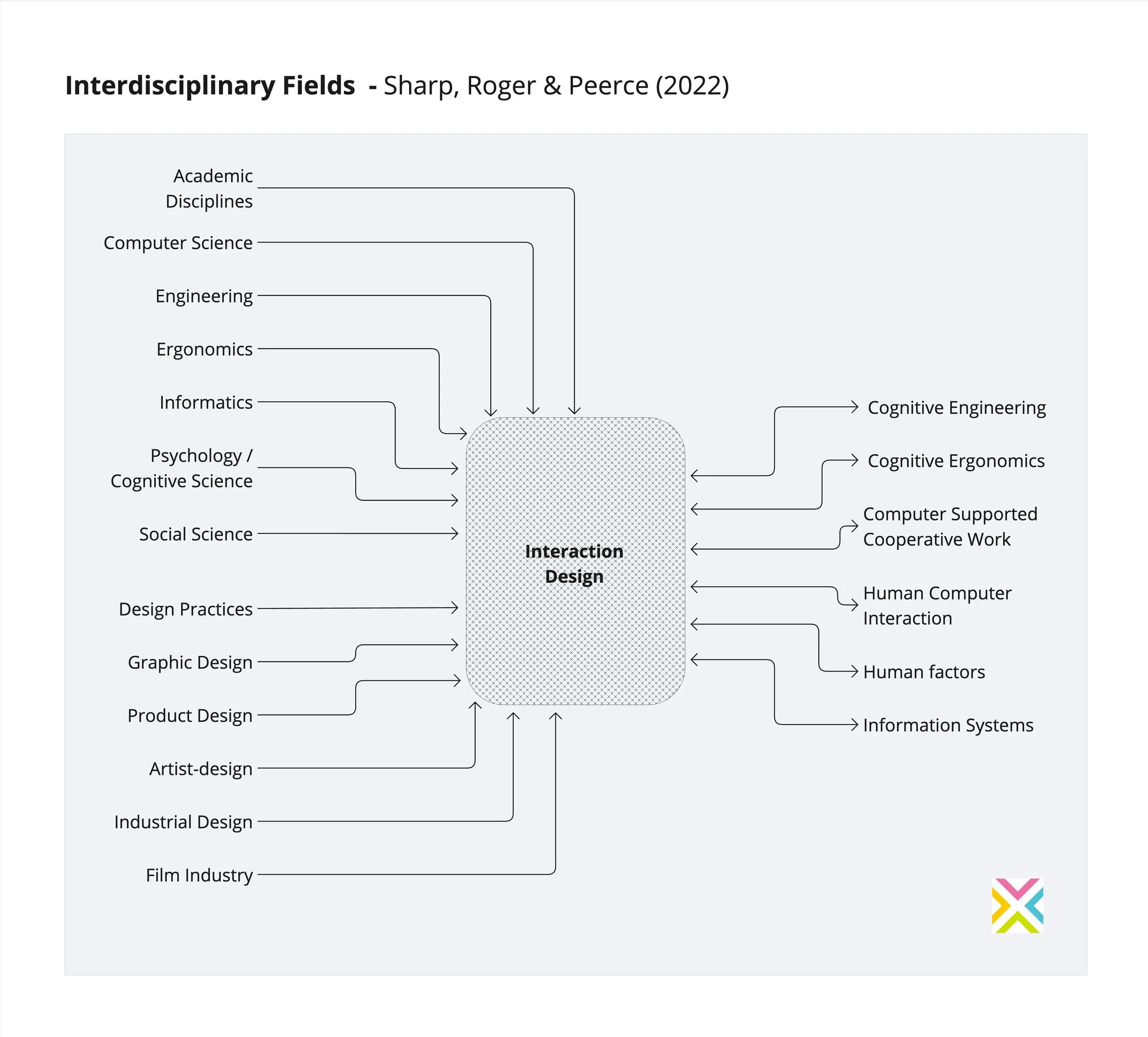
In the book Interaction Design, Sharp, Rogers & Preece list the main components that can be found in the practice of interaction design. It is worth noting that they consider interaction design does not necessarily include all these components.
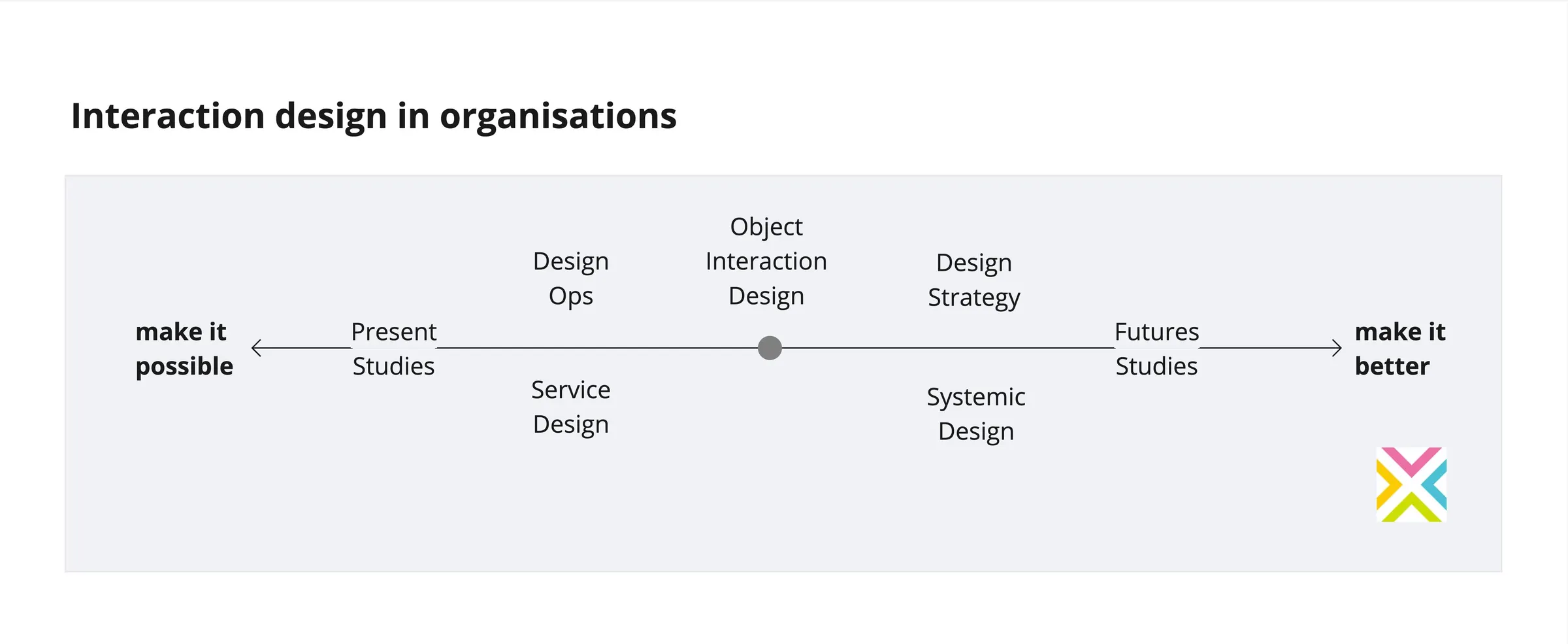
My reading of interaction design is much broader in its reading of interaction, and includes every ”[…] action or influence of people, groups or things on one another.”
See my Interaction Design in organisations diagram above.
A good way to steer yourself towards new learning is to choose to think about how to free up your design: through continuous improvement (Design Ops, Service Design, Present Studies) or through impact (Design Strategy, Systemic Design, Futures Studies).
Discovery grids/manifestos and more
You can find a set of resources for understanding these methods or rounding out your knowledge in Interactive design resources.
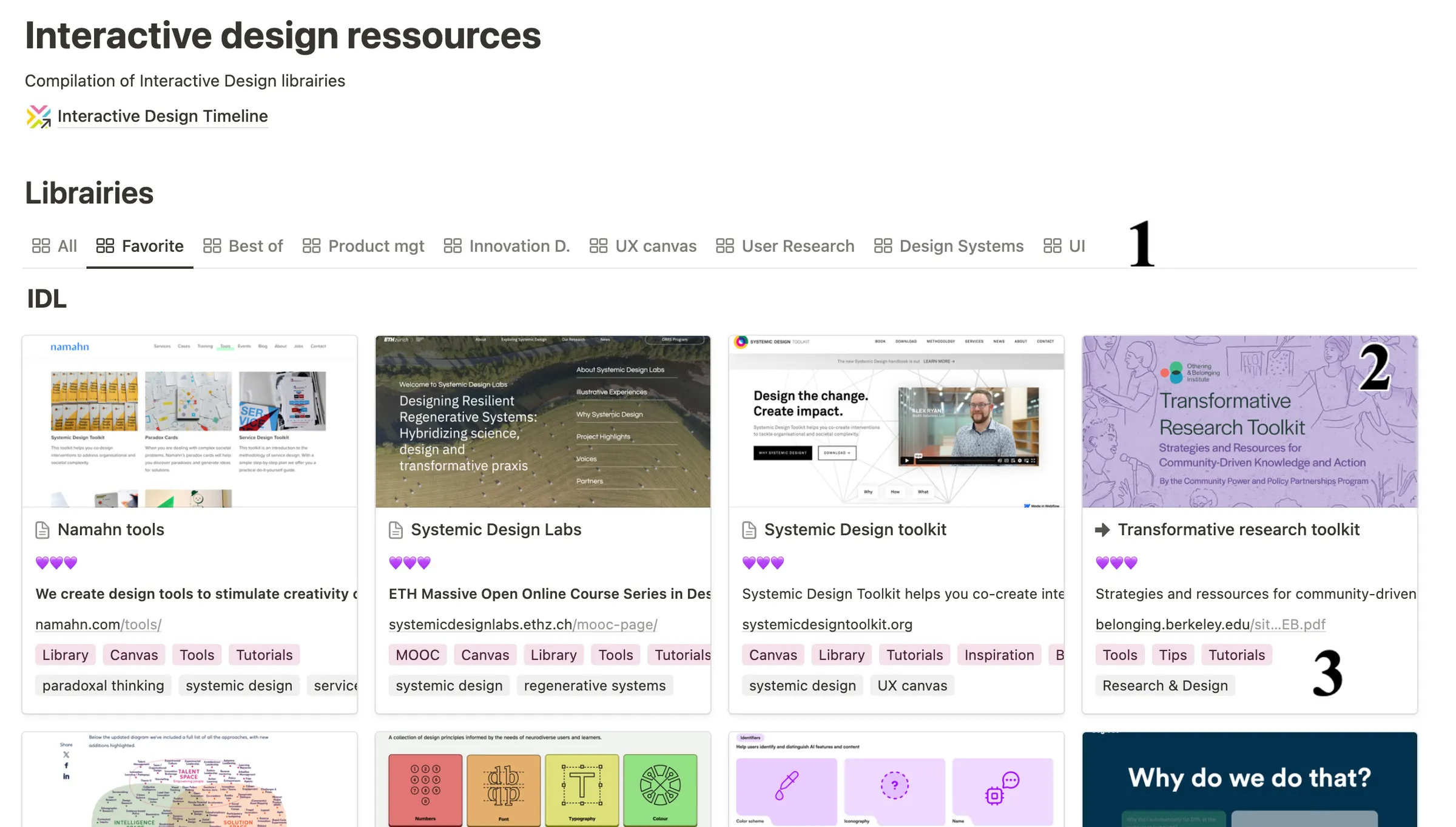
1- Filters by type of subject (Product Management, Innovation Design, …). Favorite = personal favourites, and Best of = the basics.
2- Each card contains a title, a link and a short description. Click on the card to read the full description.
3- Two types of tags: pink for the type of resource (tools, advice, tutorials, …), grey for the design discipline concerned.
All these disciplines and types of design can include different methods and often overlap,
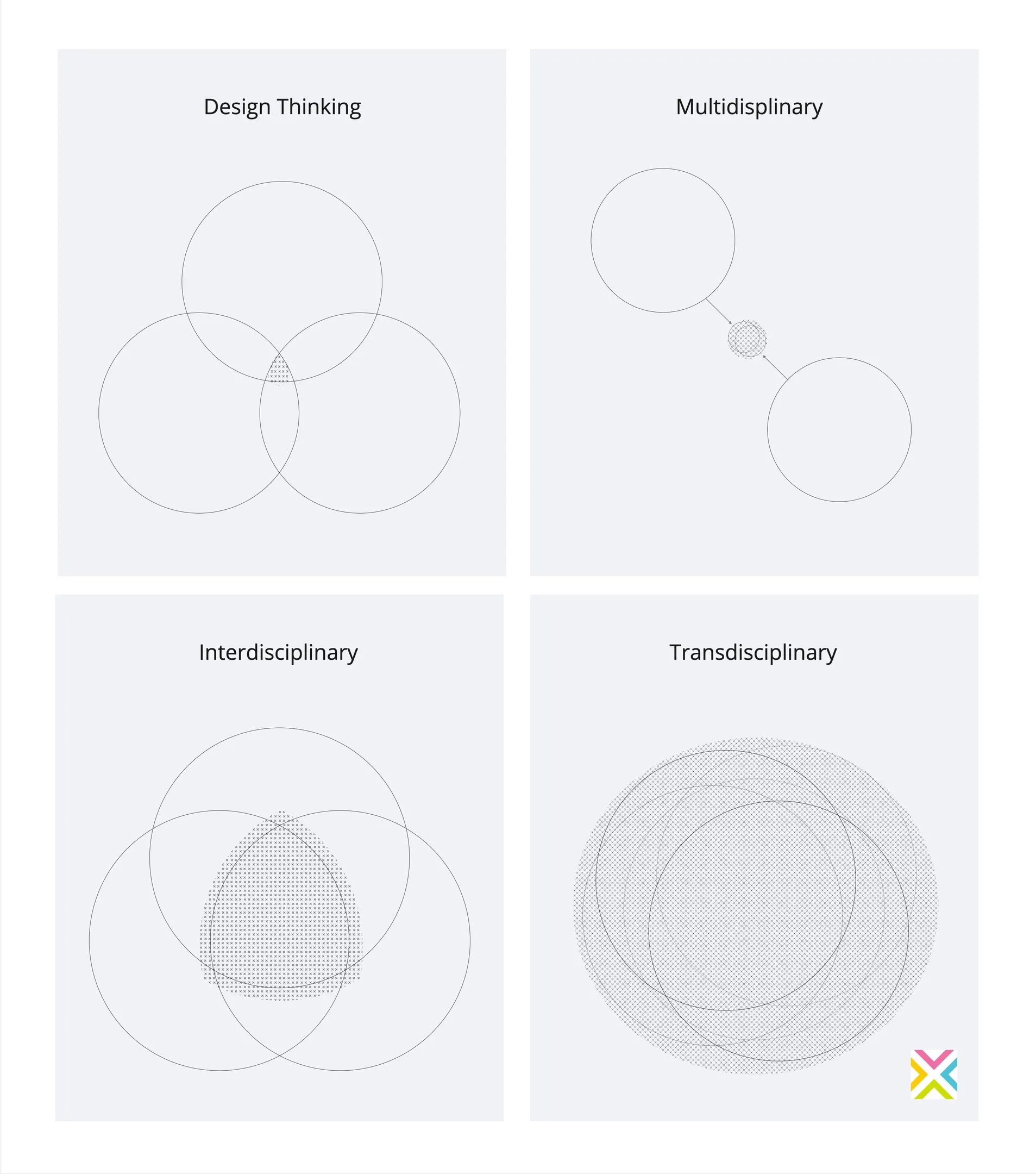
So the link between these disciplines shifts; we sit somewhere between:
- hybrid disciplines: value comes from crossing disciplines or fields. IDEO’s famous Design Thinking diagram is the example;
- multidisciplinarity (each discipline works separately and contributes to reaching the same objective);
- interdisciplinarity (a synthesis of approaches): the designer moves from one discipline to another to observe the object (cross-disciplinary); all of them help him reach his objective (multidisciplinary);
- transdisciplinarity (each discipline is transcended so that the work integrates the whole body of knowledge).
Interdisciplinarity means starting from a project, a problem, to create, make perceptible and encourage the search for interactions between kinds of knowledge and their complementarity, in a spirit of openness.
Myriam De Kesel
(future teachers & interdisciplinarity)
The context of interaction design
1/ Design adapts to the objective
Service-based by nature, apps and SaaS (Software as a Service) push product designers to acquire service design knowledge. For more detail, I invite you to (re)read the first article in this series: Design, from holistic to systemic (in French).
Within the objective, I include the ethical aspect, which adds framing elements to its scope: accessibility and eco-design are fashionable topics, but they require the will of all of design’s stakeholders (decision-makers, engineers,…).
The subject of eco-design can often be loaded: can you take pride in producing an eco-designed interface if the content, product or service on offer is not?
2/ Design adapts to its field of application
Retail, logistics, healthcare, urban planning, innovation (including funding), public policy,…
A service designer can work specifically for one sector such as healthcare, and even specialise for years on a complex subject such as improving the handling of emergencies and unscheduled care. Having co-facilitated a hackathon on this subject, I can assure you there is work to do!
Some fields of application require an understanding of specific vocabularies, measures and methods. For example, innovation requires, among other things, an understanding of its maturity in terms of technology (TRL), industrialisation, application (BRL) and market (MRL).
So you will have to bring in the profession(s) linked to the field: their vocabulary, practices and procedures.
No knowledge without knowledge of knowledge.
Edgar Morin (La Méthode, volume 3)
The designer of the collective
Collective design is interdisciplinary.
All collective design work is interdisciplinary: it is the interaction between disciplines that creates value. You probably know IDEO’s famous diagram. More than an association, it is about the designer facilitating and coordinating the act of design.
It is above all in this interdisciplinarity that the designer must understand the methods of other specialists: business management, scrum, agile, user research, SEO, data management,…
The designer will need to understand the other disciplines better. The most important foundation will be understanding the business, which today runs most organisations.
Should design be transdisciplinary?
Built on interdisciplinarity, this “higher” version tends towards the systemic and makes two major adjustments:
- going beyond disciplines aims to understand the complexity of the modern world;
- building its own content and methods from real-world problems, drawing on many disciplines.
Going beyond an object of study or a field of knowledge, past the way it is conceived within one discipline or a group of disciplines. Transdisciplinarity opposes dividing knowledge and problems into isolated disciplines. A transdisciplinary approach builds its content and defines its methods from an explicit question or a real object of study:
- “Exploiting” what many disciplines have learnt, outside any specific disciplinary field?
- Transdisciplinarity refers to knowledge that travels across various sciences without worrying about borders. André Leroi-Gourhan’s prehistoric anthropology and Norbert Elias’s historical sociology are good examples. The notion of system is present in physics, biology, economics and sociology.
As for building, that brings us back to the very reason for this set of notes ;-)
The deciding discipline
In industrial design and interaction design, the decision and the management of design action sit outside design. Only transdisciplinarity allows a truly shared decision. Here is one view of how this management has been oriented over time.
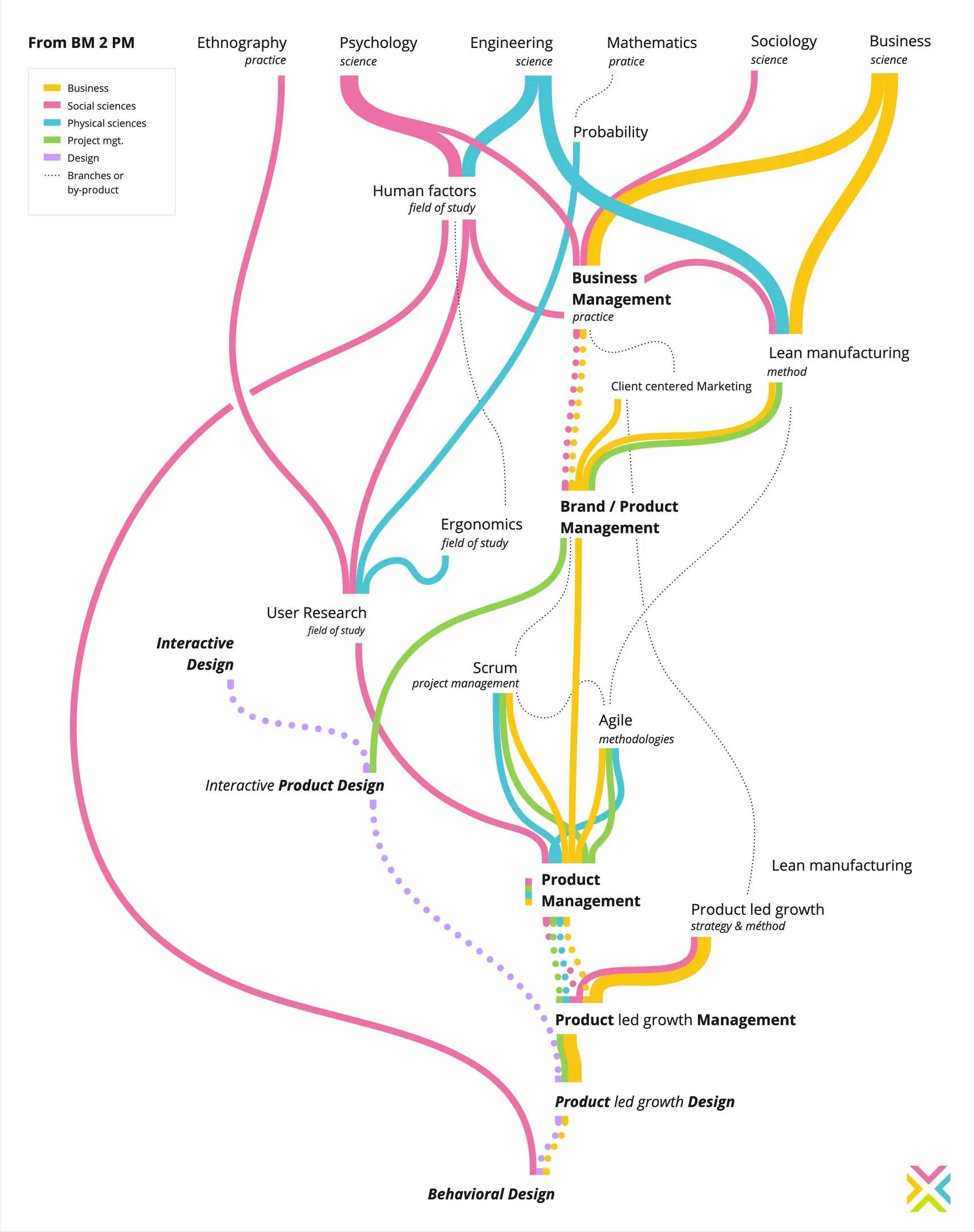
Designers ask to be at the table where design decisions are made; they feel a real imbalance between actual usefulness and profit. Here again, it falls to designers to understand the methods and measures of product-led growth management.
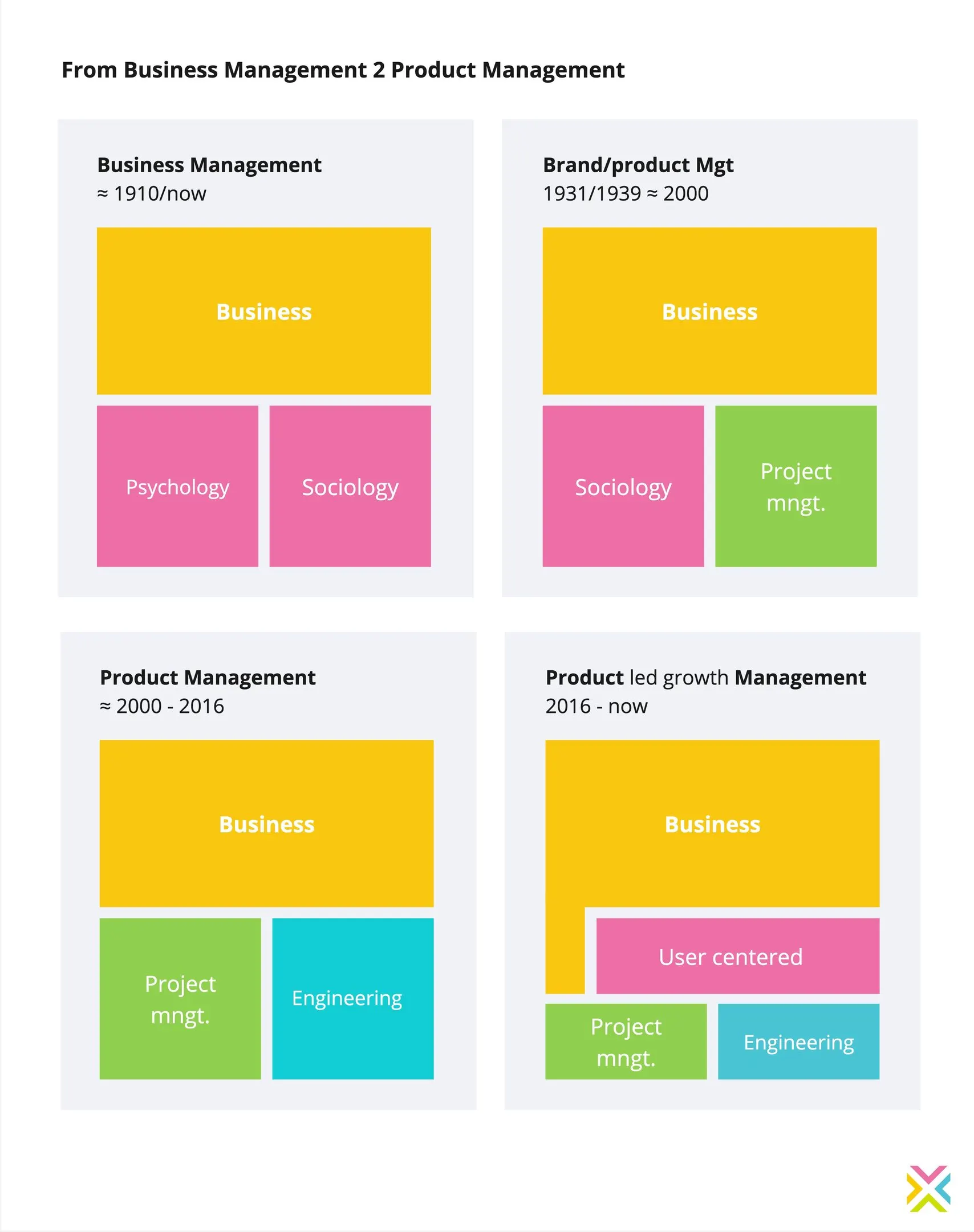
Understanding does not mean accepting ;-)