Portfolio · Management & Monitoring
Building a user research practice: the science of listening
The in-between space of internal convictions and the objective reality of the field.
- Role
- Head of Design
- Client
- The Innovation Loop (TIL)
- Deliverables
- Cognitive biases workshop, prioritised UR backlog, research process, repository (Dovetail and Glean.ly), stakeholder training, 3-person UR team
- Period
- 2023, 4 months including hiring
- Context
- A startup that had just won the EIC tender with no real knowledge of its users
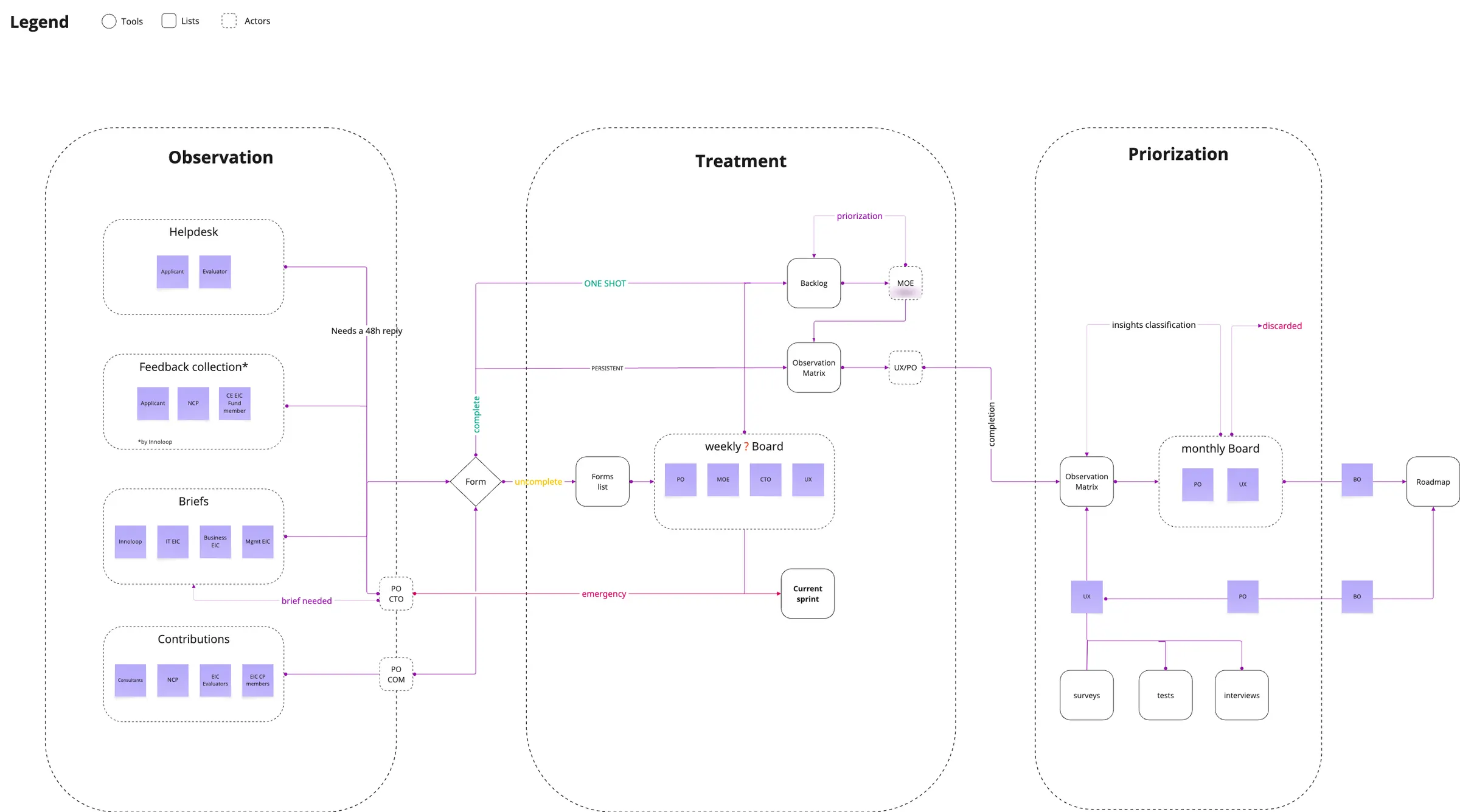
The intent
The Innovation Loop had just won the European Commission tender by listing many types of users. But the company had no objective data, qualitative or quantitative, on these audiences. The innovation experts did not share the same convictions among themselves, nor with marketing.
The trigger came from the founder. The others, marketing first, were convinced they could handle it on their own: they were already talking to their customers. They had to be shown that questioning a customer and conducting user research are not the same thing, and the user’s voice had to be put back at the centre of the startup.
The starting question: how do you build a user research team suited to weak customer knowledge and a strong scientific culture?
The mechanics
The challenges
- Hiring: a UR lead able to become autonomous quickly.
- Supporting her: sowing with her the seeds of the need for objectivity and process.
- Centralising: showing that user feedback should no longer be lost, and bringing it together in a shared tool.
The plan
- A workshop on cognitive biases, to make visible the barriers that skew decisions.
- Hiring, in 2 months. I was looking for someone quick to understand, able to pick up a domain’s language, and who knew that objectivity means not getting attached to your own ideas.
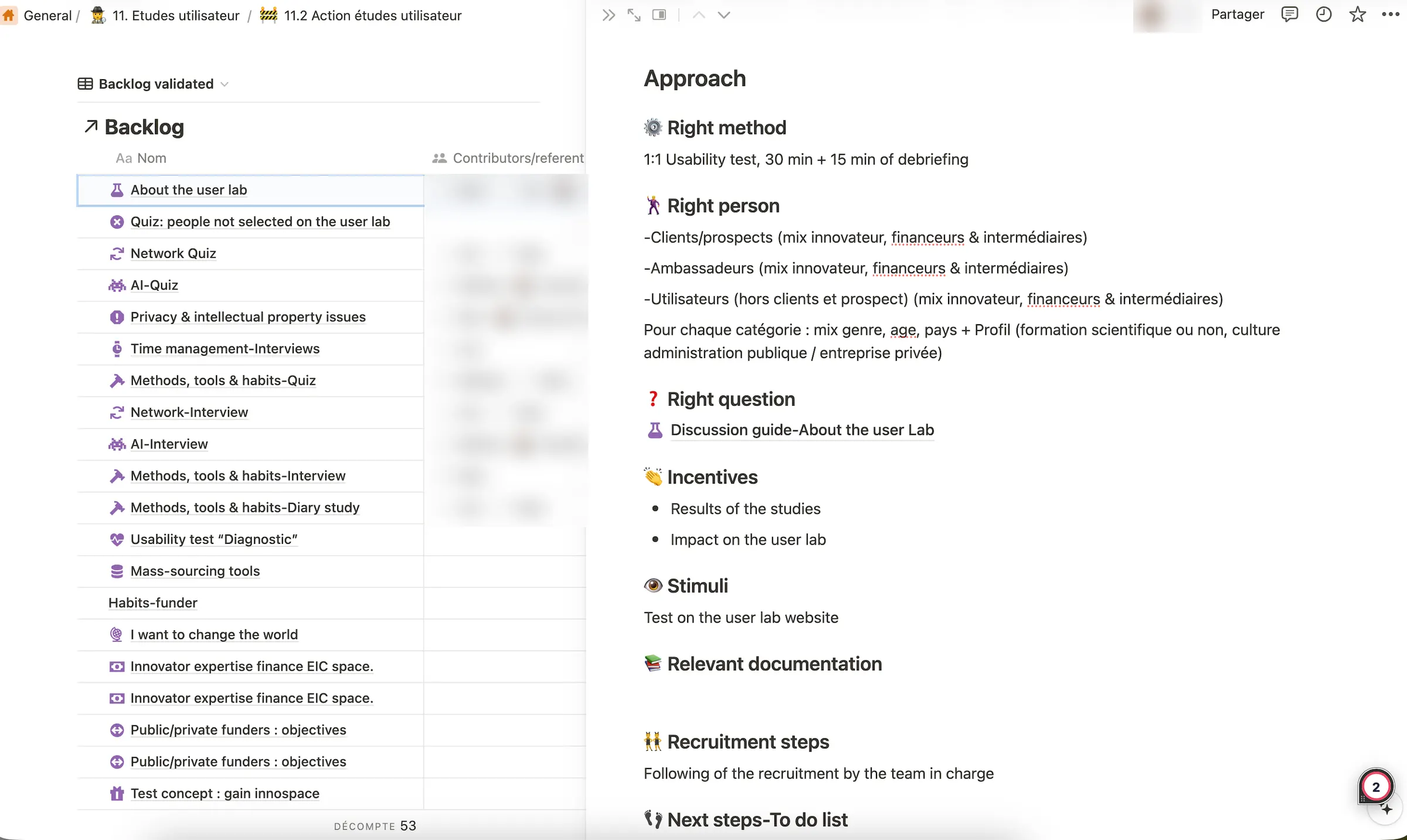
- The UR process and backlog in Notion: each study carries an importance rating (from 1 to 1,000), a type (interview, quiz, survey, usability test, diary study), a status and the target user profile. We came out of the workshop with 30 priorities.
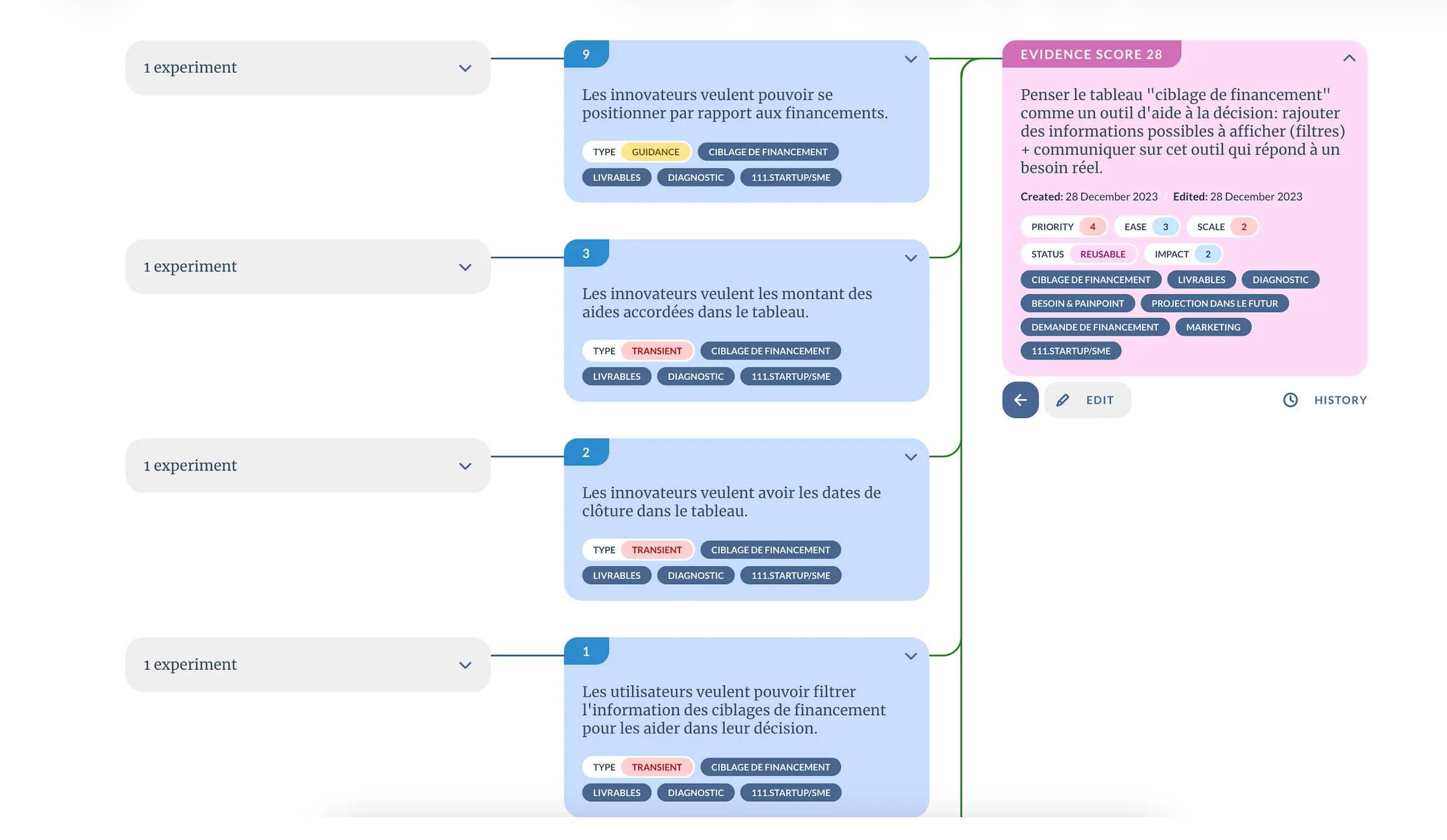
- The repository: Dovetail for collection, Glean.ly for atomic research, where each finding gets an evidence score linked to the tests that prove it.
- A collective presentation, then stakeholder training.
Evidence and deliverables
- The UR backlog: prioritised studies, with their contributors and status.
- Atomic research: findings rated by their level of evidence, turned into recommendations.
- Reaching prospects and audiences no one had been able to interview any other way.
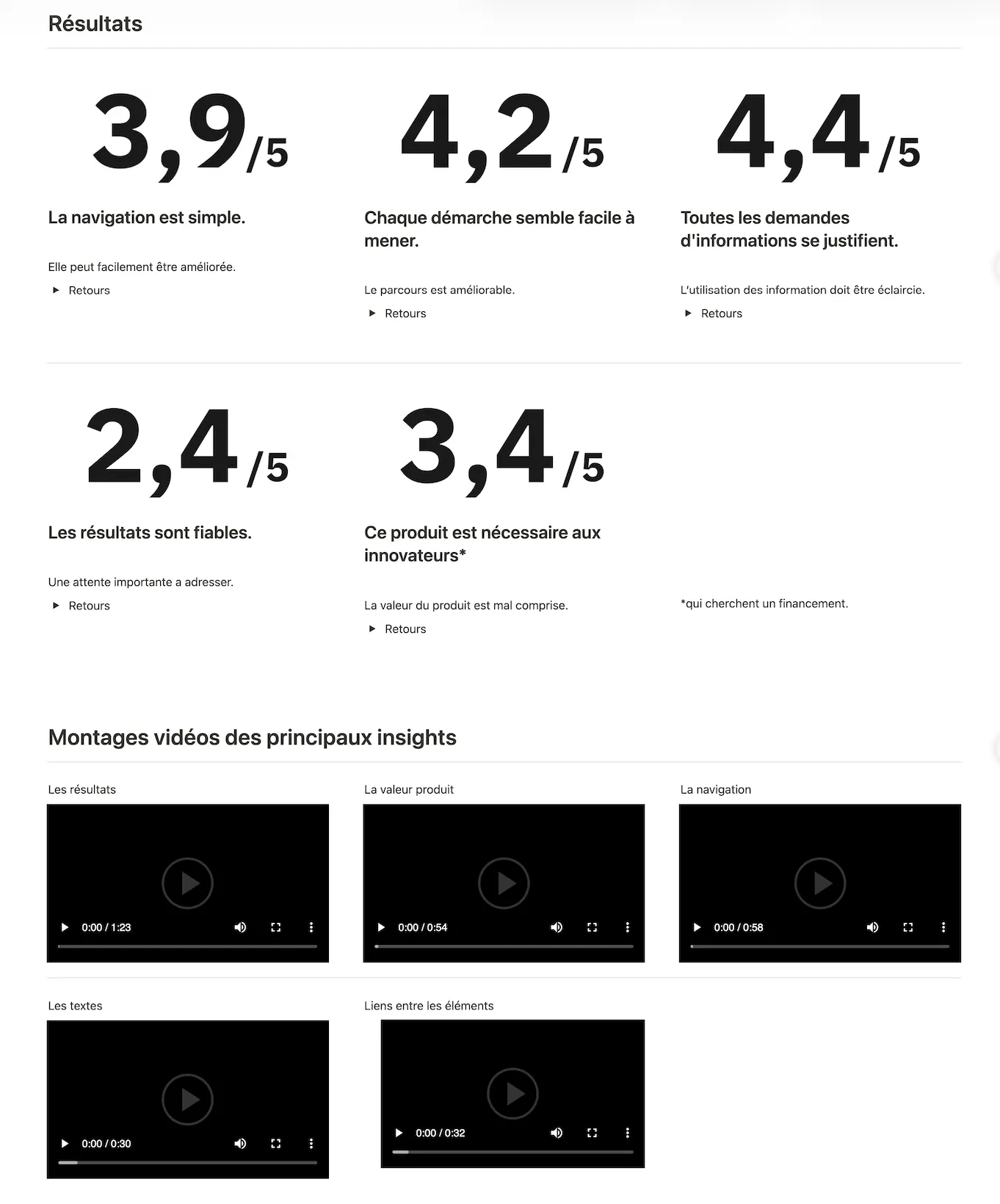
- Test reports: an example of a debrief for a prototype.
The impact
The UR team, three people, met a large part of its ambitious objectives: half of the planned surveys and diary studies. The lead user researcher gradually grew into her role and showed she could open access to profiles such as business angels.
Design choices no longer rested on each person’s conviction but on shared, proven findings.