Portfolio · Management & Monitoring
Impact & measurement: growing the team and each person in it
The in-between space of the momentum of a collective and the progress of each individual.
- Role
- Head of Design
- Client
- The Innovation Loop (TIL)
- Deliverables
- Skills and objectives matrix, team pre-mortem, continuous improvement of our Figma files and of sharing sessions with developers and stakeholders, talks and craft workshops drawn from industry watch
- Period
- 2022-2023
- Context
- An 8-person design team with varied profiles, in a growing startup
The intent
Nothing external triggered this work: no crisis, no request from the leadership team. It came from my wish to help the design team grow as a team, and each of its members grow as an individual.
There were 8 of us, with very different profiles. Two questions guided the work: how do you let a team flourish both as a collective and as individuals? And how do you guarantee, at the same time, the quality of delivery?
The mechanics
The challenges
- Holding the collective together despite a wide range of profiles.
- Covering the functions good design needs.
- Measuring the satisfaction of the other teams.
The plan
- Interviews with managers and ambassadors from the other teams. They brought out two areas to improve: the design system and communication.
- “The way we work” and “What we need” workshops with the designers. We ran a pre-mortem of our work there and identified the skills to develop: who takes what, who leads, who learns.
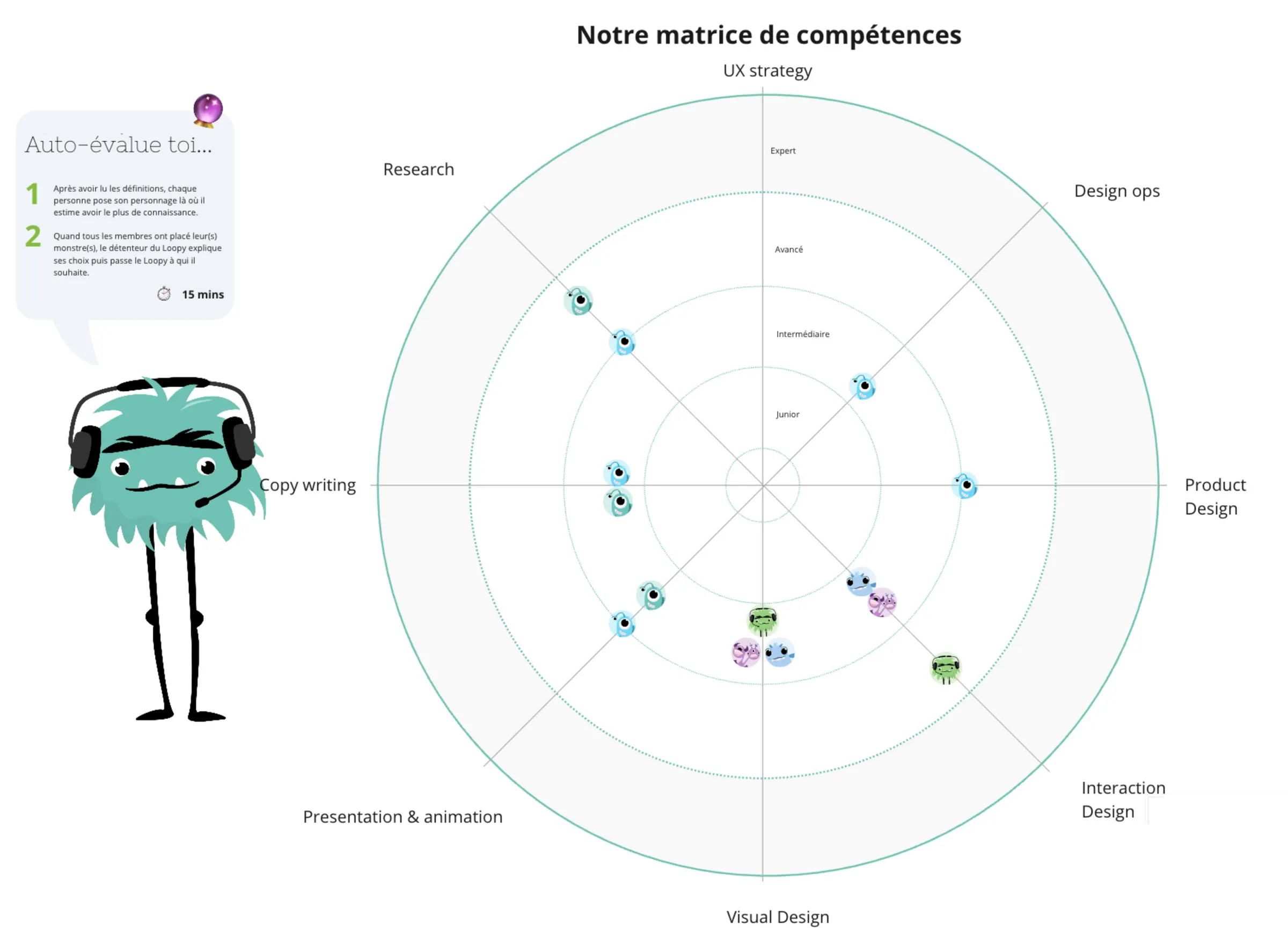
- The skills matrix: everyone places themselves on eight axes, from junior to expert, then explains their choices to the rest of the team.
- A rule for industry watch: every benchmark or study had to lead to a deliverable and a proposal for its impact on current work.
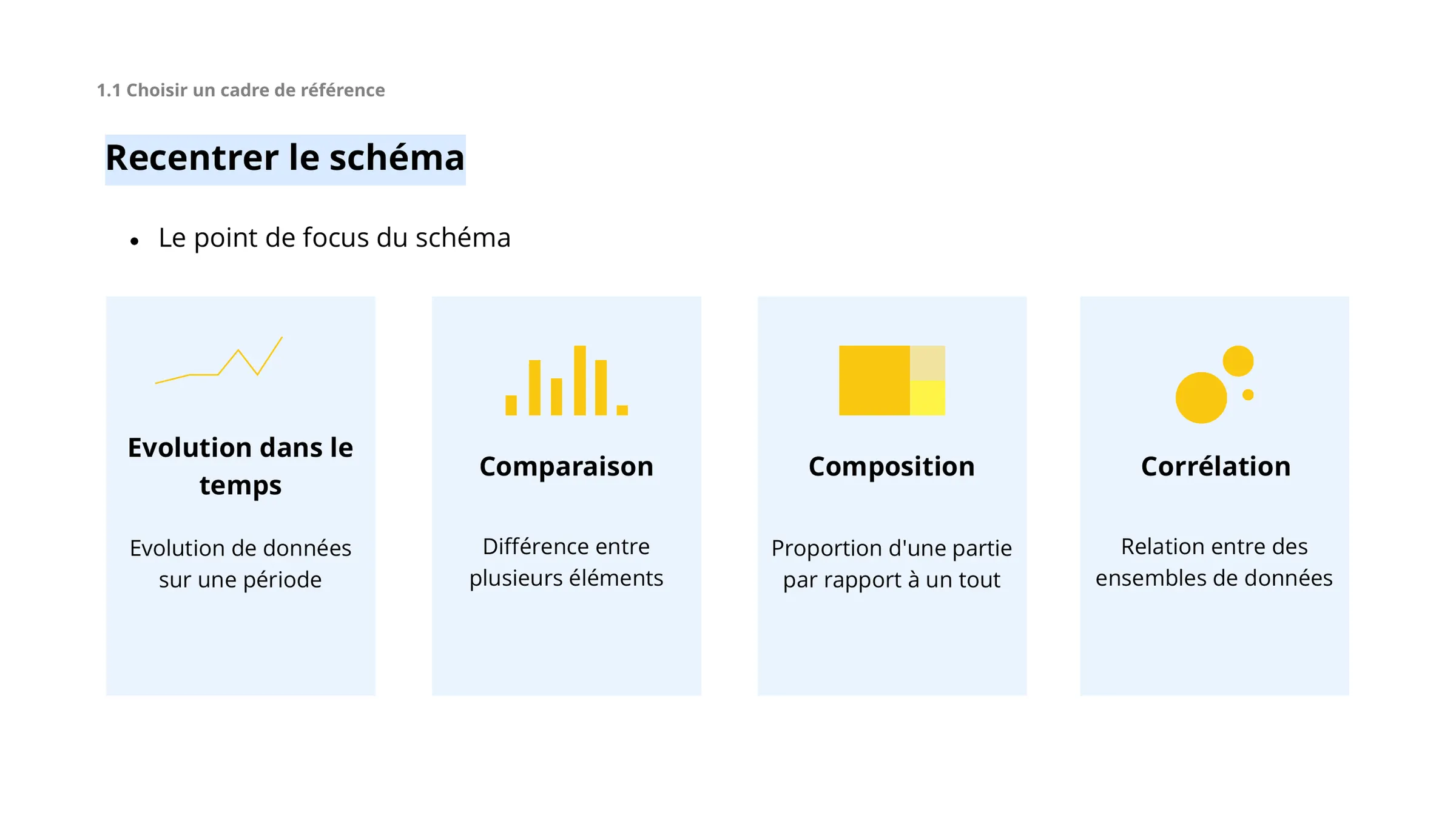
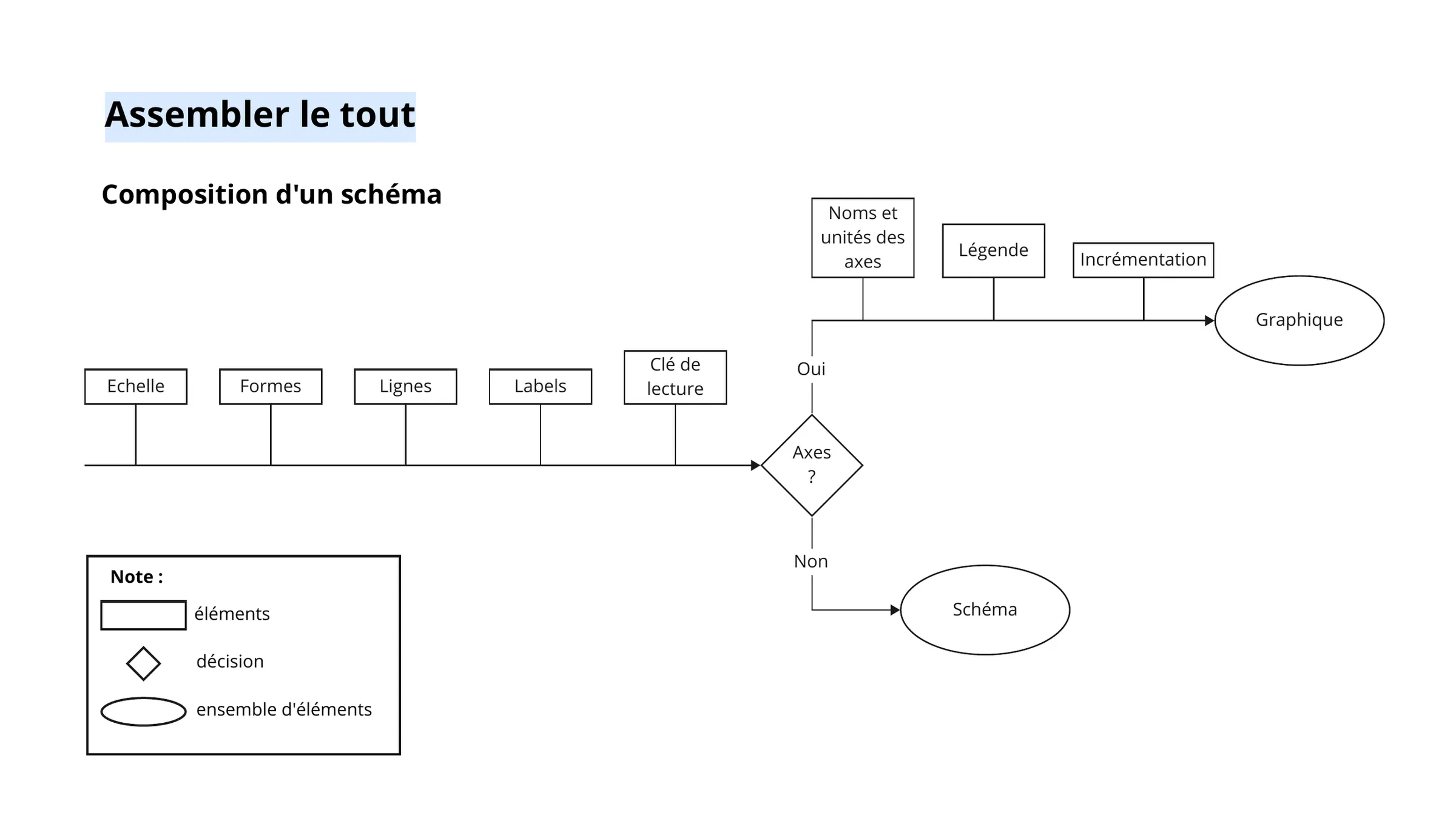
The watch rule produced talks that were used to open topics, such as the one on information design: how to build a diagram, or progressive disclosure. It also produced craft workshops, for example on gamification.
Evidence and deliverables
- The skills and objectives matrix: who takes what, who leads, who learns.
- Continuous improvement of our Figma files and of sharing sessions with developers and stakeholders.
- Industry-watch time turned into talks and workshops, always tied to current work.
The impact
Interviews with the other teams gave very positive feedback.
Within the team, industry watch stopped being time set apart: every study went back into the projects, as a talk or a craft workshop.