Portfolio · Strategy & Operations · Design Strategist
European tender (€12M): architecting disruption
The in-between space of European institutional complexity and the mapping of a disruptive innovation ecosystem.
- Role
- Senior UX Designer
- Client
- The Innovation Loop (TIL)
- Deliverables
- Readiness Level grids (TRL, BRL, SRL) to make innovation measurable, high-fidelity "online" prototypes, stakeholder map
- Period
- 2022, 3 months
- Context
- European Commission (EIC) tender, discovery and design phase
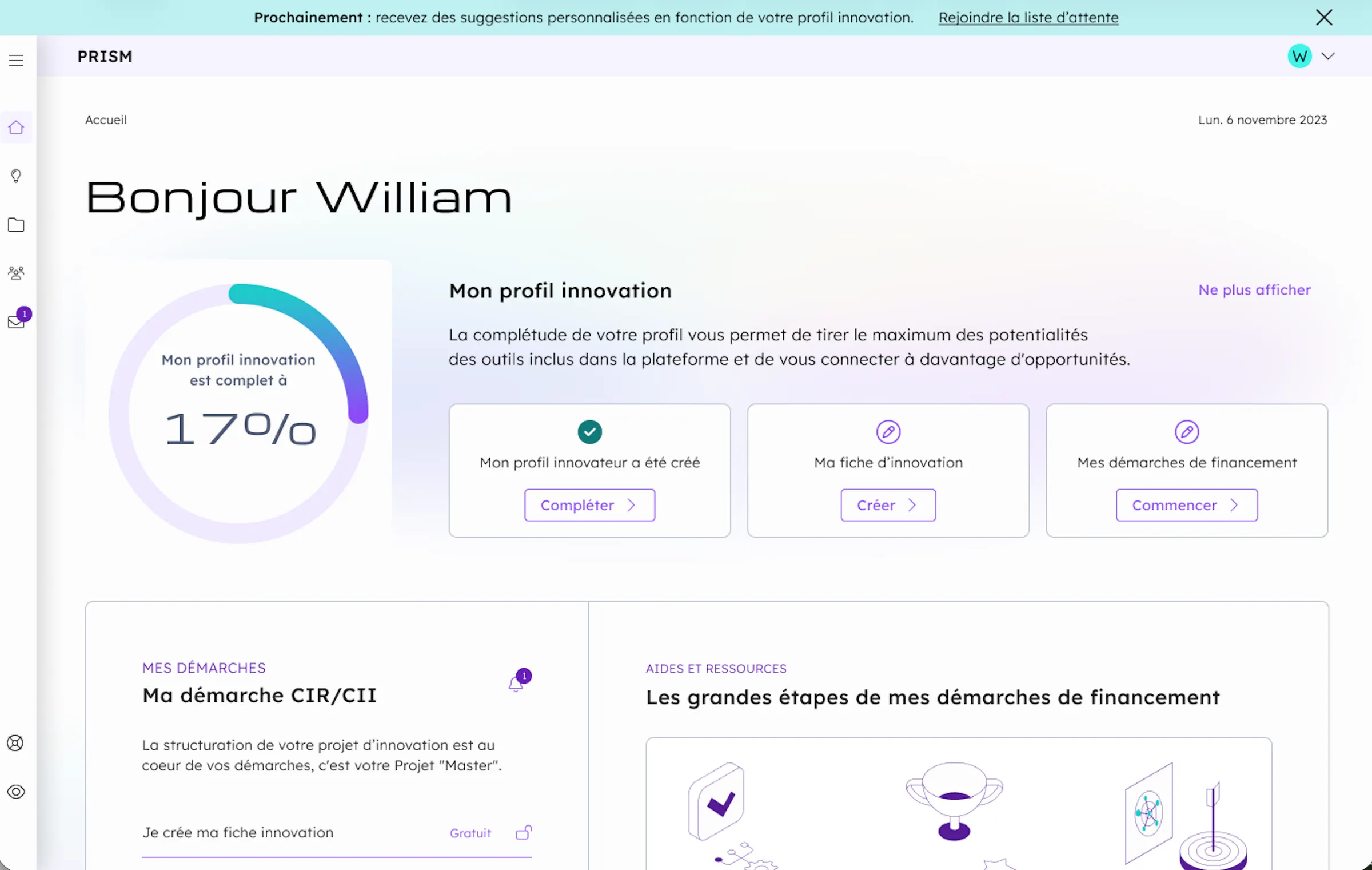
The intent
The challenge of the European Commission (EIC) tender was not only to design a marketplace, but to act as a cartographer of routes and make a continent-wide vision of innovation tangible. In this in-between space, between the EU’s sovereignty requirements and the agility of deep-tech startups, my role was to bring systemic lucidity.
The task was to turn a complex institutional roadmap into a map of readable trajectories for policymakers and investors. In line with my conviction that “the collective designer is one of the professions that can make a planetary humanism tangible at the scale of projects”, I structured the response so that the collective (TIL and the EIC) could choose its routes fully aware of the technological and societal impacts. What was at stake was using design as a tool for governing complexity, able to align worlds that do not speak the same language.
The mechanics
The challenges
- A single proposal: inform the Commission’s generalists and the deep-tech specialists at the same time.
- Making maturity measurable: build indisputable measurement indicators into how projects are put together.
- Systemic simplification: make extremely dense financial and decision flows intelligible.
The organisation
The mechanics relied on activating high-level structural plates:
- Systemic exploration (phase 2 of the meta-cycle): mapping the actors (DGs, EIC Fund, EISMEA) and the data flows to understand institutional dependencies.
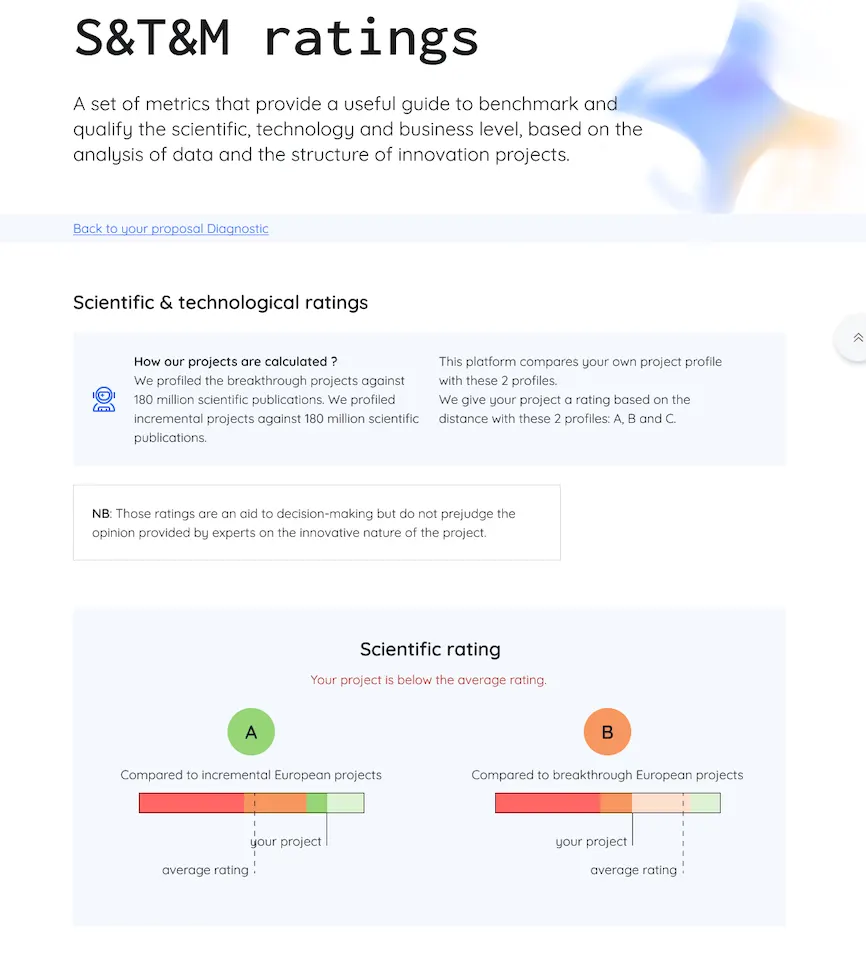
- Implementing Readiness Levels: using maturity grids to position projects. In particular, we built in TRL 7 (high technical maturity) to show the platform’s ability to handle solutions close to operational deployment.
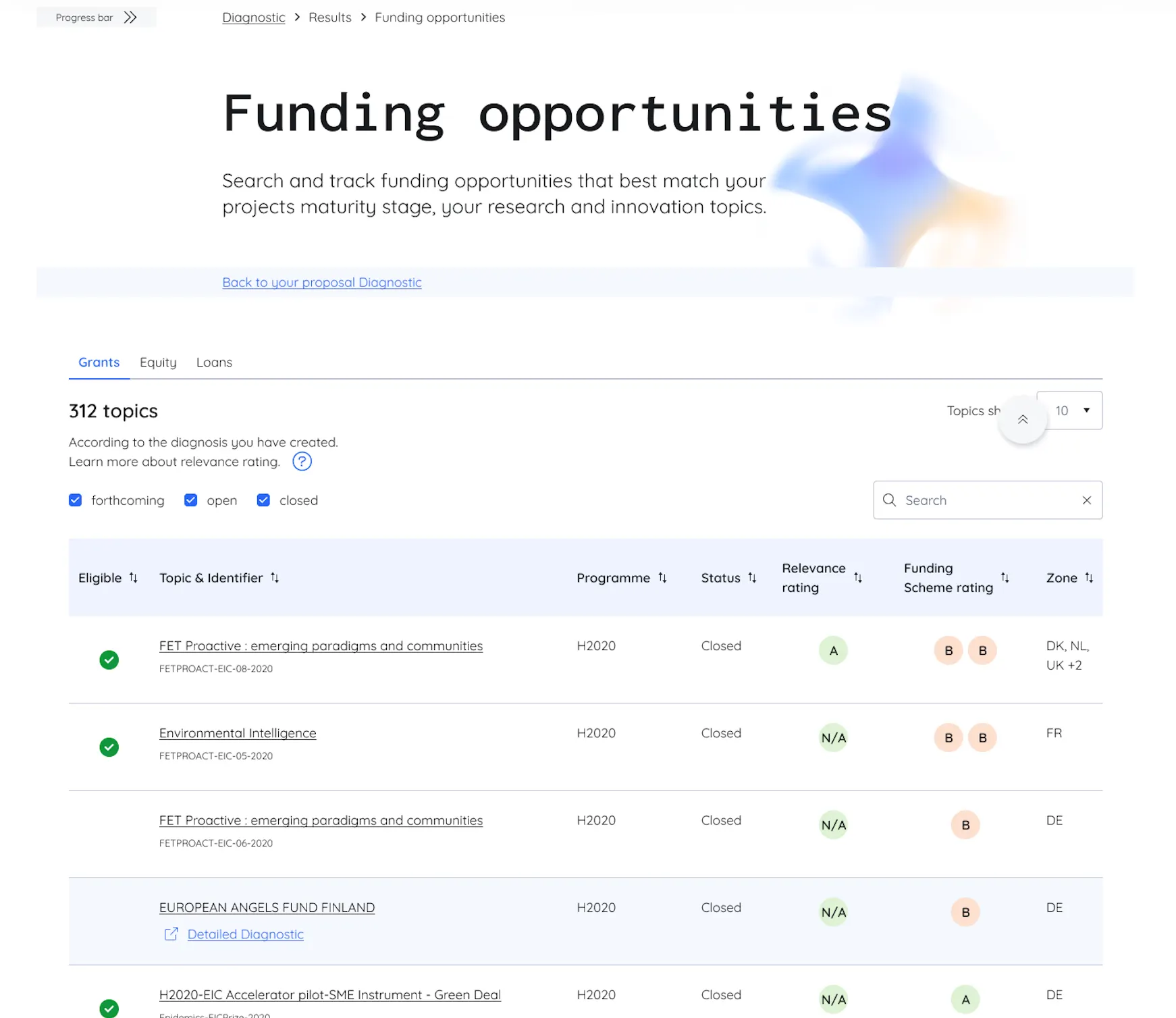
- The high-fidelity “online” prototype: a tactical choice of one high-fidelity stretch of the route to simulate the real experience of investor/researcher matching without freezing the future technology.
- Stakeholder mapping: visualising the financial circuits to make governance transparent and give reassurance on the security of the flows.
Evidence and deliverables
- The innovation “Tinder” prototype: an interface that filters projects by TRL (Technology Readiness Level) and BRL (Business Readiness Level), making the investment decision data-informed.
- Innovation cycle diagram: an explanatory illustration showing how an idea becomes a market, including the knowledge and society dimensions (SRL).
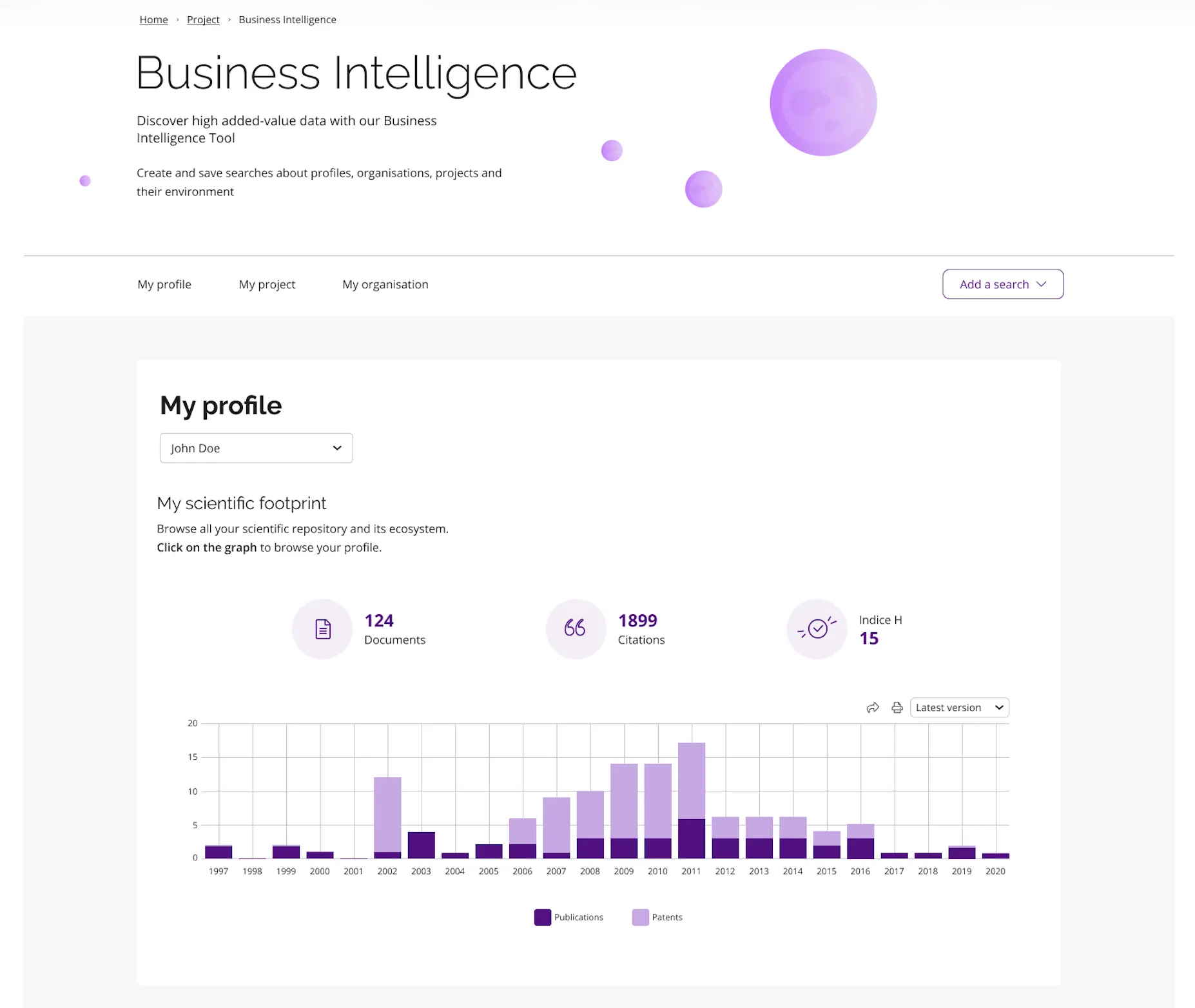
- Business intelligence dashboard: a consolidated view showing an organisation’s scientific footprint and technology roadmap.
- DACI matrix: documenting roles and responsibilities to keep the future scale-up running smoothly.
The impact
TIL won this €12M contract. By aligning design with the measurable maturity stages the EU expects, we were able to:
- negotiate the work more lucidly according to the TRL/BRL level of the target projects;
- secure the company’s scale-up phase by identifying, at the tender stage, the functions missing from the production chain;
- validate the collective designer’s posture: the ability to make the complexity of a common technological destiny shareable with European decision-makers.